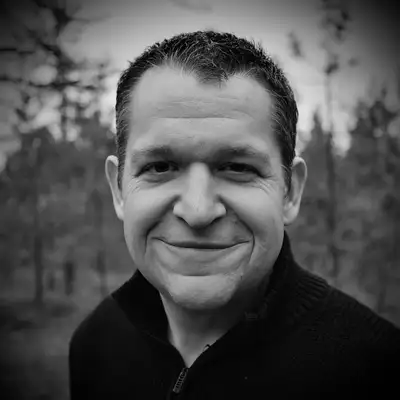
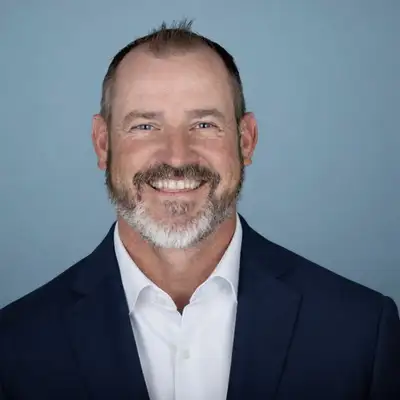
The Science of Kindness with Dr. Chris Culver
Download MP3Mike Caldwell: Welcome to another episode of Transformative Principal Podcast.
Joining me is Dr. Chris Culver from Oklahoma, friend of mine.
Chris, welcome to the show.
Chris Culver: Thanks so much for having me.
I'm excited to share this space with you and, and to have this conversation.
Excited to, to help folks and, um, explore the journey.
Mike Caldwell: Yeah, absolutely.
Well, I know you and I have gotten to know each other over the last year or so and have watched your kind of journey over the last year and kind of where, where you're going and stuff like that.
I don't know if I know your complete history, um, now that we need to know all your history, but give a little bit of your background and then, um, obviously we wanna jump into the science of kindness.
Um, I love that.
Um, and the work that you're doing, um.
With the orange sparrow and, and the work you're doing with schools and, and everywhere else.
So excited to have that conversation.
But share, share with the, the audience a little bit of your background.
Chris Culver: Let's, uh, I won't take you all the way back, but I will take you a little bit, um, just to give you, get the
Mike Caldwell: highlights.
Chris Culver: Yeah, yeah.
Just to give you context, I come from a divorced family.
My mom and my dad separated when I was six.
Um, and so I split time between North Carolina and Oklahoma.
So when people ask me where I'm from, that's a really hard question for me to answer.
I'm like, well, I'm from two states, right?
Um, and I share that because as humans, we're wired to belong.
To be seen in, to be seen, to be heard, to be valued and respected for as we are.
And so I was picked on and bullied as a middle school student, a high school student.
And I don't share that for sympathy.
I share it for solidarity.
'cause there might be somebody on the other side of this who's navigated that or helping a young person now.
And to those people, I see you and I appreciate you.
And it, it led to my work of wanting to be an educator.
I've loved school since I was a little kid.
Although my parents deterred me from, um, pursuing that path, I knew that I was gonna be an educator.
I just knew that was the path for me.
And even though I dropped outta college three times on the fourth go, I got lined up for English ed and I felt like that was really where I was supposed to be.
And so, um, I was a high school English teacher for several years working with students who were not on track to graduate at the time.
We had state assessment requirements for Oklahoma.
And so those students were successful there.
And in that space, I said I would never be an administrator.
That was not the pathway for me.
Um.
And I learned to never say never.
In 2018.
I started the pathway into leadership, was a middle school administrator for several years, and then most recently I worked at Central Office as an associate superintendent.
Um, and then much to the intro of your question, in 2023.
I walked away from pre-K through 12 education.
I worked in a really toxic environment and I had been there in 2019 and I'm grateful I wasn't at the time.
Um, but in 2019, I had to call the employee assistance helpline, and that's where I found the science of kindness for myself.
And now since 23, I've been on a mission to make kindness go viral, but to not only help other people understand the science of kindness, but to apply it to their life and to their classrooms and their schools to change and experiences, um, and environments.
Because I really believe that kindness isn't one more thing.
It's the thing that changes everything.
Mike Caldwell: I can assume in a lot.
Thank you for sharing that.
What I, yeah.
I learn something every time we talk.
I appreciate the, the background.
I assume, you know, maybe your background as a, as a student or maybe that experience, you know, prior to you leaving pre-K education.
pre-K to 12 education is, was kind of the catalyst for, for the work that you're doing now.
Like what, what is like the, the fire under your belly that like, really like was the, was the driver for what you're doing today?
What, what, what do you kind of zero in on when you think about that?
Chris Culver: I think two things come to mind.
One, as a student, much to your point, I never wanted other students to experience what I experienced.
Um, and unfortunately we know today that bullying doesn't stop at school.
It stays in students' faces.
And so I'm grateful that in my experience, it kind of stopped at school.
We didn't have social media to continue to fall in that pathway.
Um, and what I realized is I stepped into schools as a teacher and then as an administrator, is that sometimes your supervisor or those that are above you are still that bully from middle school and elementary school.
They just look differently.
And so that really led me working in really toxic spaces, really toxic, um, to earn my doctorate and I continue to move up in different.
Field, like in the field, I guess you will, in different regards.
Um, in an effort to make sure that teachers or other folks that I was leading never felt the same environment that I worked in, never felt, um, the same way that I, I felt or what other people felt because I really, Mike and, and, and true vulnerability.
I really thought everybody was working in Disney World and I was the only one that was stuck in the depths of hell.
And I was like, why is, like, why is this happening?
Unfortunately, what I've realized over the years is it's kind of the reverse.
There's not a lot of folks working in Disney World.
A lot of people are working in hell.
And so what I want people to know is you're not alone.
I see you.
Here's, here's how kindness can change your life, because ultimately we can't control other people.
We can only control ourselves, and so my fire is to ensure that no one feels the way I ever felt.
Mike Caldwell: Yeah.
Yeah, there's, there's some, uh, yeah, there's some rough environments out there, unfortunately, and some, some people that just don't, don't get it.
So tell me a little bit about the work.
Well maybe start with the science of kindness.
When you say that, um, is it really a science?
Um, what, what is the science of kindness?
Um, and then we'll, we'll talk about kind of what you're doing, um, with that.
Chris Culver: Absolutely.
So there is a science, and I think the thing that we have to be mindful of is we learned our definition of kindness in kindergarten, right?
Like, uh, share your crayons, sit on the mat, crisscross applesauce, say sorry if you hurt someone, right?
All of these things, and those are important.
Those are important for social cues and social understanding, and they're critical for our students today.
However, that foundational kindness will not allow us to be successful as adults if we don't adapt our understanding of kindness.
And so in today's world, our kids are more disconnected than ever.
They need a connection.
They, uh, respect is a two-way street in the essence that sure, maybe before people respected you based on title and authority and position.
That's not today's time.
It respect, it has to be earned by being, by being given to young people or other colleagues.
And so I, I really help unpack what is this look like?
How are these actionable steps, um, within our classrooms and our spaces?
With mindfulness and gratitude and application because truly, until we feel safe in a respective space and our, and our amygdala's not firing our fight or flight system's
not firing, we're never engaging and we're not gonna learn at the level that we need to, to, to have the academic outcomes that schools and districts are looking for.
And so, um, we are wired as humans to be kind.
There is neural pathways in our brain, and that's one of the things that I really.
Pride myself on, as in the experiences, whether it's a whole day or a half day or one hour, 20 minutes is what I did last week.
Um, around the science of kindness.
I show you what neural pathways are being lit up by the activities that we're doing, because I want you to see that it's not like Maybelline, some of us are born with it and some of us are not.
It truly is something that we're all.
Born with, but it's like a muscle.
We have to practice with intentionality every single day with the choices that we make and the actions that we aligned to do and to to be with our student, all those things, right?
And so I really try to help individuals and teams, organizations, and not just schools, but everyone understand how this works, how this operates, and why it impacts your brain the way it does.
Mike Caldwell: I'm gonna kind of oversimplify things, do you think?
Do you think people are either kind or not kind?
Chris Culver: Hmm.
Sure.
And I think sometimes there's a confusion between kind and nice.
And I would push here and say some folks think they're kind when they're being nice by people pleasing.
Right.
Doing whatever it is that other folks, but I, I.
I would hesitate because sometimes kindness is the uncomfortable pause.
It's the discomfort of being honest, um, and setting those boundaries and being truthful about it.
Right?
Being honest, speaking up for what's right, listening to others, acting with empathy.
And I think sometimes we forget that.
I don't know that it's all, I think there are probably 10% of folks who are intentionally unkind just because that's who they are.
But I think the, the greater majority of us are trying to be kind and sometimes we confuse our definition and we're stuck in that kindergarten kindness definition as well.
Mike Caldwell: Yeah.
Yeah, well said.
But what, why the 10%?
Like where's that coming from?
Is that, is that just part of their DNA?
It's how they're, how they were raised.
They're struggling with them.
Something themselves.
Like what's, what's behind the, the, the unkindness, uh, within people in your, in your experience
Chris Culver: not, I think that's a great question.
I was, I listened to a keynote speaker this week, um, and she talked about how like 60% of.
Our happiness essentially is a baseline, right?
And there's 10% of this, and that comes, uh, 10% of the genetics.
And some of that comes from just our background.
So I, my experiences folks that are oftentimes unkind come from, um.
Whether it be traumatic events, it come from high A scores, it come from shame or embarrassment.
Some of these negative emotions.
And until we name what they are and we help ourselves or other people work through them, it's hard to get outta that state because as humans, our brains are wired to go to the negative.
It's easy to look for all the problems, and that's what I mean by I was saying.
When you choose kindness, it's like training your muscle.
You have to look for the good things.
And what I wanna be clear about is I'm not.
Saying that's toxic positivity, that everything's fabulous and it's rainbows and butterflies every day.
Every day may not be a great day, and I, I know that, but there might, there is something great in every single day, and I think it's powerful when we pause to look at that at the end of the day, or especially in moments of hardships.
And sure, we might be the greatest thing of the day and we can celebrate that.
And I think in a world in which we're, we're giving grace and compassion out to other people, we're hardest on ourselves.
But the, the, the neuroscience is clear.
Self-compassion lights up the most neural pathways in our brain.
Mike Caldwell: Yeah, well talk about your work.
So what do you, what, what kind of, um, work are you currently doing to help kind of not just spread the message?
Because I mean, I, I know you're going beyond that, but to, to make change in, in this regard.
Chris Culver: So once I left, uh, the district office in 23, I had the opportunity to return to the university as a, as a professor, uh, adjunctively.
And I will tell you, I walked in with my backpack, like I was ready to rock and roll.
And I'll tell you what, my world was rocked.
I was not prepared, um, to teach today's students.
And what I found was a lot of the things that I had identified in my, uh, motivation and retention.
Uh, research for my doctorate was a lot of the parallel with today's students.
They want relationships, they want empowerment, autonomy, recognition, communication, um, these key characteristics.
And so what I realized is.
It's not necessarily that today's kids are disengaged, today's kids are bad, today's kids are this, it's different.
Right?
And that's okay.
We're all evolving.
Every generation's different.
They've had to match, um, how are they gonna serve millennials?
How are baby boomers gonna serve Gen X?
Right?
We've had this for years.
And so one of the things that I've been really working with.
Schools and organizations is understanding Gen Z and Gen Alpha because once we understand who they are, why they tick, the way they tick, why they function the
way they function, we're able to have an empathetic mindset to how we approach instruction, how we approach our classroom environments and our district work.
And to me, that's where the kindness is the through line.
And I show what that looks like within our classrooms.
And I, I'm.
Elated to share through this work.
We've seen improvement in test scores, which I know that's not the end all be all.
Unfortunately, schools are judged on that.
So I'm, I'm proud of that work.
Um, we've seen a decrease in behaviors.
We've seen an increase in attendance.
We've seen an increase in parent communication and belonging.
So I really believe to my core that kindness isn't one more thing, but it is the thing that changes everything.
And I help schools and organizations see that and come in to support the work, um, that they're already doing by not adding two, but walking alongside with.
Mike Caldwell: Yeah, talk a little bit about your, um, you know, what, what you teach or train and, and the knowledge you provide in how, maybe to, to how
communication is different or what, what expectations should be, should be different for Gen Alpha versus Gen Z. And can you talk a little bit about that?
Because I think that's.
Yeah, that's, we, we don't learn that in, in leadership school.
So I'm, I'm glad somebody's really focused on that.
I'd love, I'd love to, for you to impart your wisdom in, in that regard.
I know we don't have a lot of time in all that, but, uh, yeah.
Give us, give us some highlights on that.
Chris Culver: So for just context, if you're serving eight through 12th grade this year, you're serving Gen Z.
If you're serving pre-K through seventh grade, you're serving Gen Alpha.
And I believe the only difference between the two is Gen Alpha came outta the womb holding a device.
They know how to operate an iPhone, an iPad.
Or something of such nature, right?
We know as humans, so we connect through actual eye contact, through physical energy.
And Jonathan Haight in his book, uh, the Anxious Generation, he clearly articulates how we've moved away from a play-based childhood to a phone-based childhood.
And what I mean by that is, it may be somewhere in your experience, but when I came home from school, we were to stay outside to the lights came on.
She was not having us in that house until the lights were on.
Right.
And I think about when we were out the
Mike Caldwell: good old days.
Chris Culver: That's right.
The good old days.
I think about when we were outside having those, those opportunities to connect with our neighbors or our friends or our classmates, we were learning some of those key executive functioning
skills, problem solving, conflict resolution, how to win, how to lose, and unfortunately, whether it's right, wrong, or indifferent, that's not the experience for today's students.
And so the research is suggesting that 90% of today's students want human interaction.
They just dunno how to do it.
And one of the things that I am been encouraging teachers and educators to look at is rows were created in classrooms in the 1960s just for janitors to clean classrooms.
There's no evidence of academic outcomes.
But if we are shifting to more of a cooperative learning structure where collaborative groups.
That helps with academic outcomes, but also it helps kids have that interaction they're looking for.
Now, hear me, if we put them in groups and we don't tell them how to do it, it's not gonna work.
We literally have to model for them.
This is how you work together.
Here's a sentence similar, what this looks like, right?
Everybody has this job, so-and-so's doing this.
And I'm not saying it's right or wrong, I'm just sharing like these are structures that will allow students to engage with one another to foster that belonging, to have the competence and confidence to interact.
And so sometimes it's just minute shifts.
And I recognize even in my own, um, collegiate classroom.
I can't predict what happened when they came to my class, and I can't predict what's gonna happen when they leave my class, but I can be responsible for the present.
So just simple strategies of resetting their mind for 60 seconds, focusing on three things for which they're grateful, allows everyone to come to an equilibrium state, to, to engage in a
conversation that allows organic dialogue and connection and compassion, and all of these things that we know are needed that we probably got from our, our home and from our engagement outside.
That's just not happening, and I'm not, I'm not asking to do one more thing.
I'm just talking about just really small shifts that we can create in our classrooms that really allow the students to be successful, but also set up a space where you're not navigating disengaged students or unmotivated students.
You've turned it to where you are more of a facilitator and they're doing the heavy lifting, and so it looks different.
I recognize that, but when schools and teachers understand that allows 'em to be more successful and more engaged with their students.
Mike Caldwell: Is most of your work with teachers or administrators, or do you also have programming for the students themselves?
Chris Culver: All of it.
That's been the, that's been the fun part.
So I've been working with leadership teams on personalities and communication and strength-based leadership.
Um, so they are a cohesive unit working in alignment towards goals.
Been working with school site teams on, um, professional development, whether that be long-term contract or whole day or half day.
And then also providing anti-bullying and kindness assembly supports to students so they understand how their words matter, what this looks like.
And through each experience, I've learned to be vulnerable.
And share my, my vulnerable story of, um, some of the hardships that I have navigated, but then also how you come out of it.
And so, yeah, it's not just seventh grade teachers, it's a whole unit of supporting district because once everyone's in alignment and all of our errors are going the right direction with the same belief system, that's where real change happens.
Mike Caldwell: So is is a typical model, Chris, that you'd go into a school and work, but work both with the adminis administration teachers as well as a student, kind of the, the, the, the whole package or you kind of go in, uh.
Yeah.
I mean, is that, is that the ideal is that you'll go in and kind of work with each kind of stakeholder group?
Chris Culver: Absolutely, and I don't, and I wanna be clear that I'm not canned, right?
Like it's not a canned program.
We're coming in, we're doing 1, 2, 3.
If you do this, you're gonna be successful.
I believe because of my experiences, I've worked in low income, I've worked in high income, inner city, rural school improvement.
I mean, just to name it right.
Every school is different.
So it's about understanding the needs of the specific campus and district.
But, and to your point, yes, working with those leaders to make sure that they have the support systems in place, working with the teachers, they have it and the students.
Um, so there's cohesion amongst, and it's not, uh, in isolation or in silos where they feel like, oh, I'm in a boat by myself trying to row over here.
And there's no, like, we're all in the same stream.
We're all going in the same direction.
And sometimes it just takes an outsider to come in to understand what that looks like and that perspective.
And so that's what I provide.
Um, and again, I've sat in those.
So I can provide that unique experience and those perspectives of, of what this looks like and how we navigate that, um, to improve the experience for students and for the community, for outcomes.
Mike Caldwell: Our audience on this podcast is, um, school leaders.
So if I'm a school leader listening to this, um, and, you know, maybe I'm struggling with some, you know, culture of bullying and, and, and those types of things in my school.
Um.
W short of booking you to come in and, and, and provide some support, what are the highlights that you would share, you know, directly with a school leader?
If you're, if I was that school leader saying, Chris, I, I, I'm not sure what to do.
Um, what are some top kind of three or five nuggets that you would say start here?
Um, to, to, to make some change?
Chris Culver: Absolutely.
I think.
First and foremost, you have to have clear and high expectations, right.
Communicate what it looks like.
And then one of the things that I remember being really successful was like, this was a profile of our student at our campus, right?
And I worked with students to identify through their voice what they thought, uh, an outstanding student at our campus was gonna look like.
And this is what we all believed.
We all committed to it, right?
Every teacher.
Every staff member believe this.
And so then when moments or opportunities presented themselves that were opposite of that profile, we would say, that's not what we do here.
Right?
These are the things in which we do.
And I know that takes a heavy lift, and that's hard work of being visible, being present, checking in consistency, accountability, and expectations.
But over time, when we do those things consistently, then we begin to change the narrative and the culture of our school.
Once we do that.
Once we create a safe space that every kid knows they matter, they can be their authentic selves without fear of retaliation or judgment, then that's when begin, they begin to thrive.
They begin to engage, they begin to invest.
And so I would say create profiles or expectations around what it is that you are, you're looking for.
Um, be visible, be present, check in.
I think one of the things that I was really successful for me as an administrator is throughout the year, almost every four or five weeks, I would send out an anonymous survey to staff and students, and it would be three questions.
What should we keep doing, start doing and stop doing.
First, I'll be vulnerable.
I read that feedback as an attack on myself, like, you're a crappy campus leader and it's all crap, and you should blow the place up, right?
Mm-hmm.
I have a different experience because I'm setting in a different seat.
I see it from a different way, and they're not attacking me.
What they're doing is for writing feedback that what's working and what's not working.
And so I would bring that vulnerably to the table and say, this is what was shared with me.
Here's what my ideas are, or what are your ideas?
Right?
And it'd be more of a think tank.
And I think sometimes we see feedback as, um.
A defense mechanism or a gotcha.
And I, I was in there.
I get it.
But I think when we reframe it through kindness, right, we see it's o it's an opportunity for feedback to grow that growth mindset.
Then we're able to make some adjustments that not only support our students, but support our, our educators as well, so that we are on that same page.
And so to your po culture matters, that's foundation.
If no one feels like they belong, they're seen, heard, valued, and respected for who they are, it doesn't matter.
How many pizza parties and jean days you give them, it is not working right.
You've gotta make sure you have true alignment of what it is you're looking for and how it's working and getting that feedback along the way.
So those, those might seem cliche, but they really are foundational for setting that, that work so that you can move forward.
Mike Caldwell: I think it, it, it can be understated enough that, you know.
Being clear and, and defining, uh, being able to articulate what what you want in, in your culture at your school is really important.
If you don't have, if you can't articulate, you know, what, what you expect, um, how people to be behave and, and kind of what, what.
What the expectations are for, for your, for your culture.
Um, how do you reinforce it if you haven't defined it or if you haven't clarified it?
And I think sometimes we hang too much, um, hope on our mission statement or our vision statement.
And, and, uh.
Or, you know, we have a strategic plan that's collecting shell, you know, dust over there.
But it's like, how do you create something that's living and reinforce and, and reward or acknowledge, but also, um, hold people accountable for, for what you define as your.
Ideal culture in your school.
And I don't think we do that e enough, I don't think in schools.
I think we just assume.
Chris Culver: No, I agree with you.
I, I remember when I worked as an assistant principal with a principal, um, we lost 50 teachers out of 80 in one year.
And I was really concerned because that's a huge turnover and the response from the campus leader,
Mike Caldwell: huge.
That's, uh, that's, there's a different word for that.
I don't know what it is, but huge is an understatement.
50 outta 80, but keep going.
Chris Culver: Yeah.
So I, uh.
The response from the campus leader was, we have a teacher problem, and I was like, ah, I think we have a leadership problem, but.
I was not in that seat to make that decision.
And I, that's what really pursued me to earn my doctorate, researching teacher retention and motivation and really through the lens of culture.
And yes, money is an indicator, right?
Money is a factor, but oftentimes we can't control that.
But what teachers said they would do to.
Stay is that they have a caring relationship with their leader.
They have trust in what they're doing.
And if they mess up or they screw up or there's a failure, they're not shamed for it, but they're celebrated for trying something new and being innovative.
They're empowered, they have autonomy, they're recognized, and there's clear and transparent communication.
And really, that's what students want too.
Right?
And when we put these things in place, and I, and I know it sounds simple, and it's so simple that I worked with, that I shared this with said campus leader one time and one day, um.
When she was in the hallway, I wouldn't have to ask her a question.
She put her hand up in my face.
And so first I had to check myself for a wreck myself, but she said, I can't.
I'm, I'm building relationships.
I just talked to so and so and I'm headed to talk to this lady.
And I was like, no, relationships are not compliance.
Like, it's not like check, check, check.
Right?
They're intentional things that we do, and I think we've heard this word relationships for so many years that we've oversimplified it.
And I don't mean like it's cliche, but it really is foundational.
But if your understanding is I'm just gonna go talk to so and so and say, Hey, what's up?
And I build a relationship, then you, that's not it.
That's not how you're gonna begin to fix culture.
And I think if we don't have that understanding, then we're not able to really communicate what we're looking for in our culture, what
it is that we're looking for, student success, what it is to be a successful team player here, what is it to be a successful teacher?
And one of my favorite interview questions is, um.
What are three ads, if you would describe someone who would be successful here and three adjectives of someone who would not be successful?
Because easily you're able to discern, is this person gonna be successful here or not, right?
Or are we gonna be a fit for them?
And I think sometimes, especially in Oklahoma, we're such in a desperate need for educators that we hire just a, a human breathing body.
And I get it, we have to fill spots to serve students, but we also have to be intentional to make sure that they're not gonna be destructive of our culture and it's gonna add to and not take away from.
Mike Caldwell: Right.
Yeah.
I like what you said earlier too, on the vulnerability of the leader and asking for feedback.
Um, and yeah, there's, I. I remember doing this, you know, as a, as a school principal, I would typically do it in the fall.
So it wasn't like an autopsy at the end of the year, like how did I do?
But more of like, how can I cor, you know, gather data and, and then correct myself if you will, and, and kind of make sure that we're, you know, we can respond to it in, in time where the year's not wasted.
And I remember, you know, it was typically mid-October, I would send out a survey and, you know, similar questions, but I'd go into some depth on, on.
You know, communication and, um.
You know, all the, all the things that you want, you know, to be successful as a school leader.
And, uh, yeah, it would usually take me about 48 hours to digest it.
Usually a couple, you know, glasses of wine to like, okay, put aside the, you know, the ego and, and the, you know, but then like, look at it and say, okay, what can I learn from this?
And I remember going in front of my faculty that I think it was the first year that I, that I did, uh, my first year as a principal and, uh.
Just laid it out like, this is what I heard from you.
You know, this is where we're doing pretty good and this is where I'm completely failing, you know, as a, as a leader.
And I would, you know, it wasn't necessarily that, but it was like, this is my vulnerability.
And I felt like I was like standing naked in front of my faculty.
I was so vulnerable, like saying, these are, these are my weaknesses.
And uh, but I'll tell you, going through that, doing that experience, I think both.
Built trust and, uh, and, and confidence that I was willing to, to have that humility.
Um, but it also was really a good growing, you know, point for me, like as a leader.
Um.
We're, we are, we're never gonna be perfect.
We're never have, you know, have, have really arrived.
And so if we're not taking that pulse and checking in with, with our, with our people, um, on how we're doing, I think we're missing an opportunity.
So, I'm glad you brought that up.
'cause I think it's a really important, um, I think strategy as a leader to, to help not just yourself as an individual leader grow, but also for you to grow as a, as a school.
Um, and so I'm glad you brought that up.
Chris Culver: I appreciate that.
Thanks so much for your, for you being vulnerable and sharing your experience.
And I, I echo you when you're doing it, you're, you do feel like you're standing naked in front of all these people with Yeah.
Strings of weaknesses up there.
Um, but I've been encouraging teachers to do this too, right?
With their students.
What should we keep doing?
Start doing and stop doing because it allows the students to have a voice.
Now what I always encourage is once you do that, don't file 13 it.
Right?
Read what they're actually telling you that they want you to do.
Um, and I had some teachers do that going into the second semester of some school campuses that I'm supporting, and we saw a dynamic shift
with student behaviors just 'cause the student's like, wait a minute, they actually care about what we, we experience in the classroom.
And I think that's the same for our teachers when we do that as the campus leader, they're like, wait a minute.
And it changed the conversation.
I'll be vulnerable.
We were having a lot of discipline issues in our campus and we had a lot of inconsistencies.
And so what we had a, we did an activity, um, that we tracked who did what for what camp, and we saw just the disparity of.
Who was doing what, right?
We didn't have all of our errors going in the right direction.
And because I was vulnerable about the keep start, stop or just feedback that I was receiving, staff members were vulnerable about why they were doing the decisions they were doing.
And we were able to honestly and strategically align our behavior system.
Now, before that, we had had conversations and we had 152 different opinions about how this was gonna work, right?
And I think, um, I didn't give up.
I just had to pro, pro figure out how we were gonna get there directly.
And I think with us being vulnerable and like you said, fostering that trust, it allowed people to be.
Vulnerable in their, their decision making and what they would agree to and what they wouldn't agree to based on student behaviors and, and expectations and alignment.
And I think it's easy to think about all the things we wanna do, but we have to remind ourselves it's a slow moving process and we have to get folks on board.
And it's not gonna happen overnight, but it's with intentionality and vulnerability that we're able to foster trust and relationships with people.
Mike Caldwell: Absolutely.
Chris, as you think about your last, um, you know, several months of doing this work, what stands out to you as, as a significant win in this work?
That what resonates?
Chris Culver: I think the hope, right?
I think the connections of hope.
Um, I think people think kindness is a weakness or fluff.
Or flu.
Flu or whatever.
I mean, right?
When I talk about, here comes Dr. Kindness, he is gonna tell us something ridiculous.
I think once they see what I'm talking about and experience what I'm trying to help us understand, they're like, oh, it makes sense.
And um, I was just in North Carolina this last weekend and I had, I'll be honest, I had this guy who came to all of my sessions and he had RBF the entire time.
And I was like, he hates.
Like he hates what I'm doing.
Right?
And he wrote the kind the est email I've ever received, just about like, he liked my energy and the approach that I was taking.
And somebody else said, I, I was really hesitant about kindness before I came into work with you.
But what I realized is I love how you're approaching this, and I think that's what it's a, I want, um, the win for me is it.
Not fluff.
It's not weakness, it's not flu, flu.
It really is a strategic alignment of understanding that begins to transform spaces and people.
That's so important in today's time, especially when 70% of folks are living in a chronic state of stress.
Kindness is the thing that will reduce stress and increase motivation, and it's my excitement to bring kindness to campuses or organizations.
Um, but I never want anyone to think that it's a frilly, rainbow, butterfly experience.
It really is in depth, in its deep kindness.
Mike Caldwell: Boy, and we, we sure could use a lot more of that in our world right now.
Chris Culver: Absolutely.
Mike Caldwell: Can't we?
Yeah.
Chris Culver: Oh, I agree.
Mike Caldwell: Yeah.
So there's, yeah.
Good, good stuff.
I'm glad you're doing the work that you're doing.
What's around the corner for you?
What are, what are some things that you're, what, working on either projects or something that you're really excited about, like what's, what are you looking forward to?
Chris Culver: I just launched a podcast called The Science of Kindness podcast.
You can find it as
Mike Caldwell: science.
Nobody listens to those.
Nobody listens to those.
What?
You're wasting your time.
No, I'm just kidding.
Chris Culver: Science of kindness.
Uh, it's, uh, there and also on anywhere you listen to podcast, Spotify, apple.
Um, I have a children's book.
Coming out pretty soon, bilingual children's book around the science of belonging of what that means for students and for people.
Um, there's curriculum guides that come with that in a course for leadership teams, should they wanna explore that.
And then in July, I'm super excited to, um, share that I will release be the Light, which is a, um, 50,000 word science of kindness, my story embedded with strategies and insights.
Of how this looks, um, not just in an ed educational environment, but what this looks like for you and your respective life and how you can apply kindness to your daily living.
And so excited to see that, uh, come to fruition.
And, uh, then of course I'm on a 2026 mission to spread, make kindness, go viral.
So that's my main, my main focus.
But it's also helping people along the.
Mike Caldwell: Say your podcast URL one more time.
Just 'cause I completely, uh, derailed that.
Chris Culver: No, I was grateful.
Nobody listens to podcast.
That's right.
No, it's a science of kindness and it's at science of kindness.com.
Mike Caldwell: Okay, awesome.
And your main website, orange sparrow.org.
Is that
Chris Culver: accurate?
You got
Mike Caldwell: it.
Great.
Orange sparrow.org.
Um, if you see a bunch of orange, you're in the right place, but man, I don't know if I've ever been to a website where there are so many great resources all in one.
Um, so if you.
We'll put it in the show notes.
We'll put your podcast link in the, in the show notes as well.
But orange sparrow.org has a bunch of great stuff and also ways to contact you.
And if I can put a shameless plug, Chris is also a wonderful mentor on Link Leaders.
And so if you wanna book a live one-on-one with him that way, that's another option.
So he's out there.
And Chris, I hope kindness goes viral as well.
And uh, whatever I can do to help.
Um, support that.
Happy to do I'll, I'll, I'll try to do my part on being kind, um, not just nice but kind.
Right.
Um, but Chris, appreciate you as a human and, uh, as a friend and, uh, as a fellow education leader.
So thanks for what you do.
Uh, last question I have for you is, what does it mean to be a transformative leader?
Chris Culver: Hmm.
I think it's to be of service.
I think it's to be connected with, um, folks and remember your why.
It's easy to get lost in the, and I don't mean that cliche, remember your why, but I think it's easy to get lost in the facade of crazy and chaos and the weeds.
And just remember that we were called to serve, um, in that respective space.
And it's not our, your school or your teachers, it's a collective body of community.
And I think once we remember that we cannot only transform spaces, but we can transform lives.
And so when we stay rooted in service, it really does create an opportunity for excellence.
Mike Caldwell: Well said.
Chris, thank you as always for the conversation and, uh, appreciate you being on the podcast today.
Thanks for you the, those that are listening today and go check out Orange Sparrow and uh, Chris's podcast.
Thanks again, Chris.
Thank you.
Creators and Guests