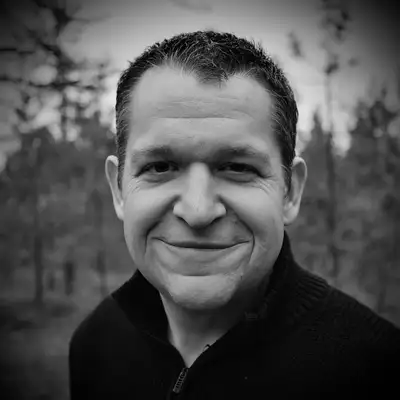
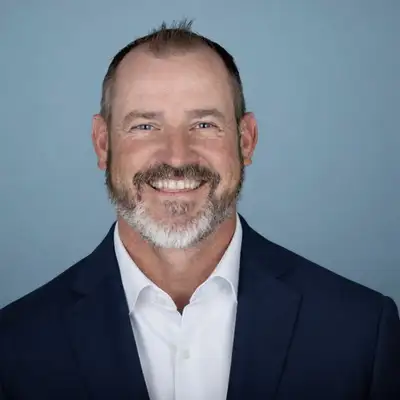
Building Relationships That Outlast Leadership Transitions with Danny Bauer
Download MP3There we are.
Boom.
There's the cup.
Looking good.
Daniel, thanks so much for being a part of the Transformative Leadership Summit.
Working with you on creating this has been awesome, and I'm really excited that I get to interview you as a guest for it as well, because I know you've got a lot of value to bring.
So when we talked about what you could do, um, you talked about some of the changes that are going on in your school, and how the power that you've been able to have in your school is having people, um, feel safe, and building relationships with them.
So right now you're assistant principal at Brooks High School in Chicago, and, um, you are also the host of the Better Leaders, Better Schools podcast, and the, um...
You're also doing the... There you go.
There's the mug.
Bring it back in.
That's right.
And, uh, it's, it's just awesome to be able to work with you, and I always learn something from you, so thank you so much for now letting me interview you as the guest for the Transformative Leadership Summit.
Yeah, you know, I've been, uh, really looking forward to this, Jethro.
I just wanna thank you so much, uh, for inviting me.
Uh, one, for the interview, and two, you know, to partner with you on this idea.
Uh, I just, I love what you're doing with, uh, Transformative Principal and, you know, we're developing a relationship, so, uh, uh, I feel connected to you.
We talk about being brothers from different mothers, and I think this is just gonna be a lot of fun.
You know, the, the idea of this summit is to, uh, empower and equip people.
Um, and we're doing that for free, right?
During the, uh, while the summit is going on.
And then of course if, if people get just such incredible value, they can always, uh, keep those videos and invest in them, and, you know, you'll share the details with that.
But this is just a wild ride and we got a lot to talk about, so thanks for having me.
I'm honored.
Well, I'm, I'm honored to have you as part of my team.
It sure is awesome.
So let's talk about, um, why it is that we need to value relationships and build those relationships first and foremost.
We've all heard that a million times, relationships matter, but talk about how it actually works in real life and why that's so important.
Yeah, you know, by the time these videos are released, uh, there'll be changes that have occurred at my school.
And, you know, currently actually the, the principal shared yesterday, uh, so we're, we're talking in June right now, mid-June, and- Uh, he, he talked about a really awesome opportunity for him, and I'm glad he's taking it.
Uh, he's gonna have the ability to serve a community at a much larger scale as a community superintendent.
Um, but, you know, we've put four or five years, uh, deeply into the school we're at now, and we've worked so hard on personalized learning, standards-based grading, uh, operating as a professional learning community.
And when people heard the news when he shared it with them, uh, you saw a little bit of fear, uh, on people's faces.
They were scared because the natural question to ask is, what is next?
And from that, not necessarily, like, bad fallout, but, like, the repercussions of, of saying the leader is, is now transitioning, uh,
it was interesting to see how people responded, and they would run to me and the other assistant principal wanting to know what's next.
Uh, and that's what shared, you know, just kinda like you had the curtain there and you pulled it back and showed me, you know, "There's everybody, there's bookcases back there
in the kitchen and stuff." But listen, when we pulled back the curtain there, um, it, it's just, it's really about people wanna know that are, am I gonna be taken care of?
Is this gonna be a safe environment for me?
Uh, what kinda change is next?
And the principal recommended that, uh, our vice principal, Shanee Jackson, uh, continue to lead the school, and I th- I know that's the right choice, and that's because she's a, a wonderful leader.
She's, uh, equipped, um, you know, very intelligent, and she knows everyone, and she knows what we're trying to do.
The worst thing to do would be to bring out some rock star or whatever, somebody with an incredible resume that doesn't know the community.
Um, you know, it... I would understand that if there wasn't a viable option there, but, uh, there is.
And so it just showed me, you know, 'cause people were saying, "Here's wh- here's what I hope happens.
Here's what I appreciate about your leadership," and all of that.
And it just, it really hit home in my gut because this, this change is happening and everybody is amped up with their emotions, that, uh, connections really are what matters the most.
Yeah.
And when somebody leaves, it's, it's a natural part of the educational system.
We're always gonna have people who are- Right ... coming and going, and every year there's going to be turnover.
And some years there may be very little, and some years there may be a lot.
But what we need to do is prepare in a relationship way for that change to happen, and make sure we have those relationships in place so that we can weather through that change and have a good experience still.
Right, and, and you're absolutely right.
And, you know, as of this recording, we had told our, our, our board and also our local school council, which is, you know, made up of parents, community members, uh, teachers, administration, uh, that we want Shenay to, to take the helm.
Uh, and within that, you know, again, it's all about that fluidity.
They, she knows the community and all of that, and we really hope that they make that decision because it's gonna be what's, uh, best for kids.
But again, it just goes back to why those relationships are so important, 'cause she knows everybody.
She knows them all by name.
She knows their kids.
She knows their strengths.
She knows their weaknesses.
Uh, and then the other key too is when we transition, and this is a challenge to all the leaders participating in this summit right now, watching us, uh, a- and are you building some type of succession plan?
Because, you know, maybe you're gonna be there forever, and that's great if you are.
I think it's wonderful to plant roots and stay in a community.
Uh, but if you have other desires too to either move up into the central office, uh, or try to, you know, lead a different district at some point, it is imperative that you are building into your people for that next step.
If you're not, shame on you, 'cause when you leave, you're gonna leave, uh, not necessarily a disaster, right?
But it's gonna be much harder for the whole community to rebound.
And one of the things that really struck me when D'Andre, uh, was talking about, uh, his new opportunity is that he feels so confident again with Shenay 'cause she's there, but the, also the leadership team.
There's 10, 12 people representing all the departments, uh, and, and they know the work.
They get it.
They've been doing this for four or five years, and it just needs to continue and continue to improve.
It doesn't have to be a massive change.
And so there is such a strong foundation at that wonderful school, Brooks College Prep, and I just, I just hope everyone, uh, makes the right decision, uh, and, you know, bets on relationships, bets on continuity, and that we can keep this work going.
Yeah, and I messed up and called it Brooks High School, and it's Brooks College Prep.
I knew that and just said it wrong, so.
Hey, we're a high school too.
It's okay, you know?
Yeah.
So, uh, you know, one of the things that we want people to get out of this summit is that, um, you need to take action.
So give me a, a
What can a principal do to create a succession plan that is a simple, "Here's what you need to do next week to make sure that you've got a succession plan in place"?
I think the first thing, uh, would be to just be extremely, uh, to be rigorously honest with yourself.
If you trust the people that you hired on your administrative team to, to, uh, pass the ball to, so to speak, uh, if you, if you do, you're great.
And you need to start finding opportunities for them to lead in new and challenging ways so that they can be ready to take that step.
If you don't, ask yourself why.
Is it because they just lack those experiences and now you need to find them?
Or if they're the right, or excuse me, the wrong fit, which is possible, are you taking the steps to either, uh, coach them, are they, are they coachable, or do they need to go somewhere else?
And don't be a big wimp about it and not give people the feedback and move them on if, if they're not the right fit.
So often we have the wrong people in our schools because the leader doesn't do what he or she needs to do if, you know, for what's best for the community.
So it's either a thing where you're giving them more experiences and you're coaching them, giving them that feedback.
Uh, don't be afraid to allow them to fail and learn from mistakes.
Don't be a micromanager, but give them those experiences.
Or, uh, if it's not the right fit, you need to do something about it yesterday.
Yeah, absolutely.
That is so vital.
Um, let's talk a little bit about how, um, you, you mentioned to me about, uh, Brene Brown's How We Carry People.
Yeah.
And talk about how that helps you build those relationships so that you've got a powerhouse school.
Yeah, if you guys don't know Brene Brown, I mean, s- I look up to her so much.
She talks a lot about transparency and vulnerability.
She is a researcher out of, uh, Houston, and, and she talks a lot about guilt and shame and how that impacts people.
And I was telling Jethro earlier before we recorded, I'm currently listening to the audio version of her text, Rising Strong.
There's so many, so many wonderful parts about that book.
But I wanna share one phrase and, and short story to challenge leaders, and guys, listen, or I should say y'all.
She said y'all is more gender friendly.
So I say guys, I'm from the Midwest, I know not all guys are listening.
But she shares a story of saying yes to a speaking gig that she shouldn't have said yes to.
Uh, and she was very frustrated about it.
Uh, it was in a, you know, the, the distance, the, the traveling wasn't a big deal, but the problem was she had to bunk up with somebody.
And she likes, she prefers, and I think probably a lot of us would like our own room.
Uh, when she told the organizers about that, they said, you know, they, they, they shamed her into, "What?
You're so good that you need your own room?" And so she, even though she had that boundary set, "I need my own room," she still said yes, and bunked with someone.
So knock, knock, knock on the door.
"Come in," the person says, and she comes in, and this, this lady is eating, uh, I don't know if it was a wolfong, Jethro, or it was some type of dessert With, with, uh, you know, icing all over and that sort of thing.
And the lady's like, "Oh, pardon me. You know, I'd shake your hand, but I've got glazing all over my hand."
And so what she does to Brené's horror and to mine, 'cause I'm a neat freak, I love my hands clean, she wipes her hands on the furniture, right?
Not, not on a... She doesn't wash them, even though there's a sink obviously in the, in the hotel.
She wipes them on the furniture, then looks at her hands.
They're still dirty, so she wipes some more on the hotel's furniture to then shake your hand.
And Brené keeps telling the story, you know.
It's obviously a non-smoking environment.
The lady's smoking on the patio, and she tries to challenge her there, and she's just like, "Whatever." So Brené brings this... She, she, she gives her speech.
She leaves, you know, as quickly as possible, and she tells her therapist this story, and she's talking about how bad this person is.
They're a, they're a terrible person.
And the therapist, you know, in, in a therapist way just listens, doesn't necessarily offer a comment.
Brené is obviously judging this woman, and we can all understand why, and she asks this question, and this is what I want leaders to ask.
She says, "Do you believe that this person was trying their best?"
Oh my gosh.
And she started thinking about that, and after a long time of really considering it and talking to her friends or whatever, she really got to a place
where she now believes that people, despite how they perform, let's say in our schools, 'cause we're school leaders, that they are giving their best.
And the implications of that as a leader are, are tremendous because I'll be quite honest.
There, um, there's a, there's a teacher I've worked with, and I'll just say in one of my buildings so that I don't give it away too much, but believe me, i- in my judgmental way, I have evidence that she's one of the worst teachers I've ever seen.
But the problem is when I s- start, uh, disliking her as a person, when I stop, stop giving her the benefit of the doubt, and it's, it's, it's not, it's not the person that I should dislike.
It should be the behaviors that they're doing.
If they're late to work, let's talk about that, you know?
But let me not tell a whole story of why, 'cause they don't care about the kids.
They don't care about the job, you know.
Uh, heavens forbid that they disrespect me as the leader, and that's why they come late to work.
And so and, and the lateness was just, believe me, the, the, the, uh, foundation of this person's poor behavior.
They, they can't teach.
They're never prepared, et cetera, et cetera.
But if I were to ask myself that question, is she giving her best, and my friend DeAndre too, the principal, he said, "Hurt people
hurt people." If I started looking at this- teacher like that, I would have so much more empathy and maybe a little more patience.
I would still have those hard conversations and ultimately have to let her go, which we did.
But it would've been so much better for my heart and for our relationship.
'Cause I, I, even though I try to hide it, you know, and people call me the zen master, they can't read my face sometimes, I know there's things that I give off when I don't necessarily appreciate that person and what they add to our community.
So that's the thing I want people to walk away with from this session.
Do you believe that people are giving their best?
And if they are, you know, how does that, uh, challenge you in terms of how you interact with them?
So the real value there, I think, is assuming that they are giving their best, whether or not there is any evidence of that, right?
And who are we really to judge whether they are or not?
The reality is, is we should just assume they are when we are in a leadership position, unless they can tell us that they're not, right?
Yeah.
You know, and I think the fear is that, uh, we're gonna get hurt in the process or some, some type of negative outcome will happen.
But the... you know, don't let fear guide what you do.
I mean, if you assume they're doing their best, what could be the implications of that, the consequences of that?
They're only gonna be extremely positive.
What kind of culture could you build if you had that type of mentality?
So that's, it's really a great challenge to me.
And you know, I think it's a, a, a demonstration, too, of, of grace and patience and compassion, and we all need it.
Uh, Jethro, you know I'm going through a challenging time as of this recording.
And even though I'm working very hard, uh, it's... I've had a higher capacity for work in the past.
So I'm definitely giving my best right now.
Um, but compared to my best, let's say a year ago, it's a, it's a lower value, right?
Uh, but it really means a lot to me that people aren't treating me differently, that they still think I'm the same amazing guy.
And so I in turn wanna, uh, give that to others as well.
Right.
And I'm sure that those who, as, as soon as you've told them you're struggling or as soon as you hear someone is struggling, your empathy shoots through the roof, right?
Right.
Because you're like, "Oh, I didn't realize that this happened." You know?
And in the interview, um, with, uh, um, Justin Bader, that, uh, uh- Sure.
Sure ... is part of this summit, he talked about a teacher that he was doing an observation on, and her dog had just died the night before.
Mm-hmm.
Yeah, she's not gonna be her best that, the day after her dog died.
Um, and he's, he's gonna have empathy and say, "You know what? Let's just redo this observation. We don't need to, to go back and make you feel guilty about
this and that other thing." And so I think the, the challenge here from, from the story from Brené Brown is do that ahead of time and don't wait, right?
Yeah.
So what, what are some of your pieces of advice for people to do that ahead of time when maybe they haven't done that in the past and they don't really want to be forgiving and kind and understanding because they're still really frustrated with this person?
How do we as leaders start doing that when we haven't done it before?
Where do we need to start?
Phew.
You know, that, that kinda thing is like a, you know, a, a very deep question that you have to work on yourself and you have to start getting really curious.
That's another phrase she uses that I like a lot, uh, regarding people and situations that make us upset.
But then, you know, if this message is resonating with you and you know you need to make a change, you gotta get curious about why you have this type of, uh, you know, feature, I guess, in your personality.
Um, and start asking yourself some questions.
But the other thing too is you can't, you can't do it on your own.
So I'm sorry, like, you know, viewers, I don't necessarily have, you know, wake up, meditate for 15 minutes, uh, give yourself an inner bath, which people call, you know, drinking a glass of water and eat healthy and all this.
Um, I don't have any tips or tricks on necessarily how to, how to change that mentality by yourself.
But what I can say is if you do it in a community, right?
So if you're willing to take the mask off, if you will.
If you're willing to start engaging in real deep relationships and bring to three or four, you know, trusted confidants that here's something I'm struggling
with and I wanna get better, and I want your feedback and I want you, you know, to punch me in the face if I'm not changing, uh, that's what's gonna drive it.
You know, people that love you, that care about you, want you to be successful, they're for you, but will not hold back when you do need the hard truth.
Uh, and it's, it's, um... I'm sure people know that both of us run masterminds, so that's a great opportunity if you don't necessarily have that community.
You could join us virtually, just like this summit, and start building relationships and have that type of accountability.
If you're fortunate enough to have that locally, then you just need to start, uh, sharing in that type of vulnerable way, inviting people
in- Uh, setting those goals, I think that's important, having very specific goals, uh, that you can measure, that people can ask you about.
Um, and make it public.
And here's something that's even scarier.
I wouldn't necessarily... I wouldn't ask the school community to hold me accountable, but what if you told the school, you know, "Here's what I think are my strengths.
Here's something that I really wanna change, and I'm investing in myself and working with this group to change it, and I just wanna share that with you so, so you know.
Because you're important to me, your success is important to this school.
The kids won't do well without it, and, you know, it's just out there.
So I'm not gonna hide behind it.
I know I need to work on it, and I just wanna trust you with that information." So that'd be pretty interesting, uh, I think, to try out in your schools.
Yeah.
So you gave two really good things right there.
Number one- Oh, all right ... yeah.
Let me know what they were.
I'll, I'll suss 'em out, man.
Don't you worry.
Number one, get curious about situations that make us upset, and number two, trust your community with information about yourself.
As leaders, we are out in front, ready to get, um, mocked and beaten up in the court of public opinion.
That happens all the time.
And you know what?
It's okay for us to be vulnerable about what our real weaknesses are, and it's really hard for people to make you feel bad about something you already know you're struggling with.
So you know what?
I'm not too good at this specific thing.
Um, for me, I'm not too good at attention to detail, and I have these great ideas, and I really need people around me who can, um, who can pick up those details and start putting things into place.
For example, um, the assessment, uh, in our district, taking care... making sure all the students are taking all the tests, I am not good at that.
If I am in charge of that, it's not going to work, and I know that.
So I ask people who are super anal and super focused and super close, pay attention to detail, they're the ones who put those assessment calendars into place, and I've, I've only said that to those two people that I've put in charge of that.
So even me saying that here right now to you and all the viewers, that was liberating for me because now I don't feel like I have to hide behind that anymore, you know?
So that is... Being able to trust your community, I think, was spot on and definitely a great piece of advice.
So thank you for, for talking through that and sharing that.
Y- you know, something that you shared there, too, I think people really respond to folks that are s- self-aware, right?
The, one of the worst kind of leaders- is somebody who goes throughout the day, right?
They're dropping little grenades everywhere, and there's collateral damage all around them, and they don't see it, right?
How much more connection are you gonna create within your building when you say, "This is something I'm working on. I know it needs to get better. I'm sorry that it's not, you know,
as developed as it needs to be yet." I mean, that type of self-awareness I think really communicates that you, that you care about others and you care about developing as a person.
And, and then it models to your people, too, you know, where do you need to improve?
You don't even have to tell them, "Jethro, you're not great with the details and, uh, you dropped the ball on this assessment thing." Jethro starts thinking, "Wow, Daniel's sharing that with me.
Where can I improve?
Where can I ask for help as well?"
Uh, and one other thing I wanted to share, too, that, that D'Andre's great at, uh, is w- you know, and you talking about opening up about yourself, right?
You know, not just weaknesses or whatever, but, uh, if you have kids, use them 'cause people get mad, right, wh- when some new initiative comes, uh, through and they start thinking about, "How are we gonna implement this?"
You know, and there's just questions or whatever.
There's change.
People start to get a little, uh, frustrated by that.
But when... He often counters those initiatives with a story about his kids, and he uses pictures.
It's brilliant because it always brings the anxiety level way, way down.
It's hard to be mad and it just be like ugh, like that when you see these cute little four-year-old, two-year-old, you know, on the screen.
So unfortunately, I don't have kids.
Maybe I should just start lying and put pictures of kids up there.
But if you have kids, use them.
But the real, the real, uh, point of the story is to, to share about your life.
Uh, imagine, too, you know, when you're a teacher, remember when a kid sees you in the grocery store, they freak out 'cause they can't believe you're a real human being.
That's the thing.
You gotta show people that you're a human.
They know it.
I mean, we're all humans, but bring, bring that personality, uh, to life with your community.
You don't have to be just a leader that has it all together 'cause you don't, and if you do, you're a liar, right?
Yeah, no matter what, you're a liar.
That's for sure.
Yeah, exactly.
So just invite people into your story.
They, they wanna be connected to you.
They wanna know you're a good person.
Yeah, you know, one of the things that, that I was thinking of while you were talking was letting people know, um, what you're working on.
I, I had a, a teacher that we had to n- uh, not renew her contract with, and, um, she...
her reason for it was that- I didn't like her.
And the reality was is that I really did like her, and because we had to have so many hard conversations, it was really hard for that to come through.
And- Mm-hmm ... um, you still gotta let people know that you're real and that you care about them, and you can't just, you know, let it be all business all the time.
And, you know, that's, that's some... For some people, that's a hard thing to do.
For other people, that is totally natural, and building these relationships is very easy to do, and, and talking to people and making sure they know that you value them is very natural.
And for others, that takes a lot of effort- Mm
and you really gotta work hard at that.
And, um, you know, when we got a lot of stress and we got a lot of things on our plates as leaders, it's easy for us to get in that rut, um, of not showing people that we care and that we know who they are and that we are human also.
So I think that was really good advice that you gave to invite people in and share your story with them.
That's just powerful.
Um, I really appreciate the time you've taken today.
Um, any closing words before we sign off?
No, just, uh, the... I think my challenge to, you know, ask people if, if they're giving their best, you know, and what the implications for, uh, how you treat them, how you view them.
Uh, just start getting curious.
Um, start being, you know, or continue to be honest with yourself.
And we talked about, you know, having a community of support.
So, uh, if you don't have that, there's, there's help out there, and really the only thing you need to do is, is, uh, reach out and ask for that help.
So Jethro runs those masterminds.
I have them as well.
We'd love to work with you and, uh, help you be the best version of yourself.
Yeah.
Absolutely.
And if you've been watching this and you've learned something and maybe you missed some of the other interviews, all of them are as impactful as this one is.
And so please click on the little button down below that says All Access Pass.
Go ahead and sign up for that, and you'll be able to have these plus a bunch of other free goodies that are gonna come along with it.
So thank you so much for watching and for doing your part to be the best leader you can be.
Thanks again, Daniel.
Appreciate your time.
Thanks, Jethro.
Creators and Guests