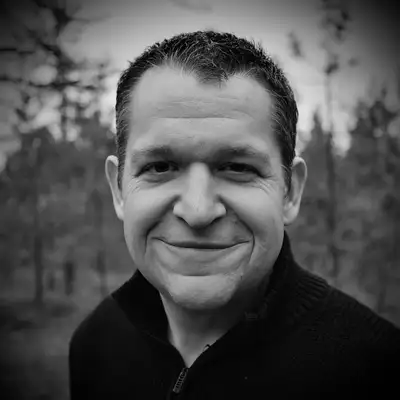
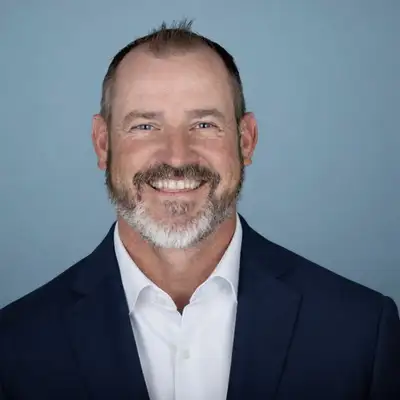
Developing Teacher Leaders with Kyle Palmer
Download MP3I am really excited to have Kyle Palmer, the principal of Lewis and Clark Elementary, on the Transformative Leadership Summit today.
He has been an inspiration to me for a long time, and if you go back to the Transformative Principal podcast, you can learn a lot about the, the kinds of things that he's doing.
But what I wanna talk with him today about is how to develop teacher leaders.
We're gonna take some time to get into that.
He has done a lot of amazing things, and he's presented at Model Schools Conference about all those awesome things, um, like maker spaces and innovation and all that.
Um, Kyle, thank you so much for being a part of the Transformative Leadership Summit.
I'm real excited.
I'm very excited too, Jethro.
Thank you for asking, and I'm looking forward to sharing some of the things that we've done at our school that hopefully will help others learn and transform education in their school as well.
And one of the benefits of doing this type of conference is that we can really focus on things that are specific for principals, things that they can do to improve an aspect of their leadership.
And one of the areas where you're really strong is empowering your teacher leaders.
And, um, I learned that last year when I met you, and you had people who, um, who were there presenting with you, and they looked like and acted like they were in control.
And, um, they knew their purpose, and it was just really cool to see that.
So let's talk a little bit about some of the cool things that you've done at your school recently, and then let's talk about how you empower teachers.
So start by talking about some of the things that you're really excited that are happening at your school right now.
We real- Uh, probably a lot of it started with our maker space and what Angela Rosheim created in our library.
Angela is a immense talent.
She's extremely passionate about education.
And really, she was, she was transforming education in our school before anyone really knew what she was doing.
It started with her genius hour instruction and, and getting kids to follow their passions and to learn about something that they're passionate with.
That resulted in her needing supplies and materials and space, so that turned into the maker space which we got a big grant from our Liberty School District Foundation, uh, to get started.
And then from there, it just, it just continued on.
You know, I... And when I present our, in our presentation next week, you know, part of how we organize our presentation is, is to start, you know, small and then go all.
And I think we started small with the maker space and with what Angela was doing in the, in the library that impacted the kids in that classroom when they were in there.
And then we started to try to build the capacity of that out to all of the others in, in our school, and, and Angela was a big part of that.
Absolutely a big part of that.
Other things that, that, that kind of came about after that was our Project Lead The Way.
We were asked to be a, uh, kind of a beginning school for Project Lead The Way or PLTW, which is a curriculum designed, uh, designed modules that
we've implemented into the classroom, um, to put STEM, to build STEM skills, science, technology, engineering, and mathematics into the classroom.
Last year... Two, two years ago, we did two of the engineering modules.
This past year we did, uh, computer programming and then biomedical sciences modules in our classrooms.
And I think that was one of the first things that really got our, our teachers to see the power of what we were trying to do, and that was to, to
create more relevance and rigor with our kids, create more of a student-centered classroom instead of a teacher-centered, a teacher-directed classroom.
And even though there, you know, it wasn't, uh, it wasn't smooth as anything is, I, I look back on my nine years as being a principal, and I describe PLTW as probably one of my biggest challenges of implementation, but also one of our biggest successes.
And as skeptical as some people were when we first started, there is no way you could take PLTW away from our teachers, um, 'cause they are so passionate about that, what it does for our kids.
The, the conversations and the dialogue and the learning that it has created in our, in our classrooms has been extremely, uh, powerful.
And I think that's just led to other changes in their days and, and it's led to more PBL-type units.
Uh, it's led to personalization that we started a little bit last year.
It's led some teachers to start doing some co-teaching.
We, this past year, we created maker spaces in our hallways.
We created a maker space outside for our recess.
Um, our, our teachers have been extremely, um, dedicated and focused on, on how to continue pushing the envelope of innovation in our
school, and that's been extremely humbling and extremely exciting, and I, I just love our school to death Yeah, that's, that's awesome.
And w- why, why are your teachers taking such an active role in it?
And we all know teachers are dedicated, we all know teachers want to do things, but not in all schools do they take such an active role as they do in your school.
What are some of the things that you've put in place to help them be the leaders in your school?
I, I, I've always defined leadership by how you can get others to go from point A to point B. So it's... As a leader, it's, it's never been about me, it's never been about what the principal says or the principal does.
It's very much not a top-down organization at our partic- our, our school.
I view all of our teachers, all of our staff, custodians, paraprofessionals, as equals.
And actually, uh, to, to prove that point, one of our paraprofessionals in our library, Lynn Haynes, is maybe the second-biggest influencer in our school.
She... Her and Angela work together, and she just has an extreme dedication and passion and humongous heart for kids.
And, and she has done so many things at our school to posi- to positively impact our school as well.
So those two are quite the dynamic duo.
I, I think as a leader, you have to be secure.
You have to be secure that others are going to do things, that others are going to get credit for things, that others... You know, we've always tried to create a school
that everyone loves and everyone wants to, you know, be part of something bigger than themselves, and, and they wanna come to school every day and give their all.
And I think I'm... I think I allow a lot of autonomy.
It's, it's... You know, I'm not gonna walk in and, and tell teachers they specifically need to do this, this, and this.
There's, you know, there's always things we're tight on, but we're also loose on, on how they do that.
As, as being a PLC, one of our, you know, beliefs has, has been that we've, we never expect teachers to walk lockstep with each other in their team.
We never expect teachers to be robots in the classroom.
We... That's, that's the, kind of the art and the science of who they are as a teacher.
We have to have things that we're consistent with and that we all agree on, but we want teachers to be who they are in the classroom.
And, and I think they, you know, they feel they have a lot of autonomy, and I trust them.
And, and I think, you know, giving a lot of trust has gone a long way to- than, you know, versus just, you know, watching over every little thing that they do and micromanaging them.
Yeah.
You know, I was talking with, uh, Doug Timm as part of this, um, leadership summit, and he, uh, talked about the tight and loose, uh, leadership, where you're tight on things and loose on different things, and how important that is for us to be successful.
Can you talk a little bit about how... what things you're tight on and what things you're loose on with your leadership?
Sure.
We're, we're tied on, you know, we have specific learning outcomes for each grade level and each subject.
We're tied on they're going to track those and are going to monitor the learning from their students.
We are, you know, we're tied on that we got, uh, you know, defined learning outcomes, and we're loose on how they get there.
We're loose on what they do as teams or what they do as teachers to use that art of who they are to, to get their, their kids to learn.
We're, we've been tied on these last couple years on, you know, we want more of a student-centered classroom.
We want less teacher talk, we want more student talk.
We, we want kids to fail and learn from their failures, and then we want kids to innovate and try new things.
We want kids to work in a maker space.
We want kids to make and create and have fun in the classroom.
We want kids to, to be in a, in a, you know, more comfortable, more of a, in a different learning environment where they're, you know,
more flexible, so they're up, move around so, you know, they can sit where they like, they can collaborate with who they need to.
Um, but we're loose with how they design their classrooms, what they, what they use, how they do their groups, how they have kids work together, how they, you know, how they... We t- we talked about we're gonna be tied on the modules.
You're gonna do a module per quarter.
It's, you, we can be loose on you fit it in when you think is best, so, you know, how your day is.
I know when we first started PL2W, every grade level did it somewhat differently.
Some grade levels try to put it in a couple, three days, and some grade levels did it an hour every day for two weeks.
Some grade levels, you know, chose half days.
Um, we wanted the modules to be done and to be done effectively.
And, and again, by giving the teachers the autonomy to do that, they, they, they put it in when they thought was best, and they took more ownership for that.
So- Yeah
... I love those examples because they really teach you a lot about your school just in that little examples, those little examples.
But how do you help teachers feel safe to, to do those things that they can be loose on?
How do you make sure that they feel the looseness and you avoid the, the micromanaging that's easy for us as administrators to start feeling?
Uh, that's a really good question.
I, I try to give feedback, you know, through observations and through being in classrooms and being with teams and try and talk to them about what we expect.
And, uh, and I think just through those conversations, listening to them.
I, you know, I think it's, it's really easy to tell if someone's listening to you or not listening to you.
I've always taken the approach, you know, as a former teacher, I've always... I, I got great advice when I, when I was becoming a
teacher to becoming a principal, that don't ever forget what it's like to be a teacher, and I've tried to remember that every single day.
And, and listen to teachers and, and, uh, and- And it's easy to, to rebuke them and to say, "Well, th- you know, stop making excuses." But, uh, we've tried to not do that.
We've tried to listen to them.
I think they feel listened to when they've got concerns about things.
I very much try to protect our teachers and, and, you know, try to take some of their obstacles out of the way.
Um, and I'm just reiterating, you know, just reiterating what we are as collaborative teams.
There's, we're tight and we're loose.
These are what I expect you to do.
This is what I'm gonna focus on.
You know, the rest of the stuff, i- it's what you feel like as a team you wanna do.
And, and when, and when teams work closely together, they get very motivated, they get very inspired, and they, you know, when teams have
autonomy and trust, they, they will far exceed your expectations, as opposed to just doing whatever they have to do and being done with it.
Doing things because they want to, not because they have to.
Yeah.
You know, um, having to deal with teachers who aren't doing the things that you're tight on, how does that impact them doing the things that you're loose on?
Um,
there's probably less, there's probably less trust, you know.
Um, a lot of it, though, is, is, is it's kind of the, that peer pressure amongst teams.
I think that's why it's so important to, to have highly collaborative teams, is that people understand they're not just responsible to, to the principal, they're responsible to each other.
And if I'm gonna share our kids and move our kids around, I'm not gonna let my teacher team down.
You know, you can say what you want to about the principal and, and the leaders, and sometimes, you know, people will get crossways, but
they rarely ever get crossways with their, with their team and with their, their, their, their friend and their, and their colleague.
They don't wanna let them down.
And, and I think when we maintain that focus on what our teams need to be doing, we talk a lot about the right work of a PLC.
I try to describe for them, you know, spending time, uh, building a cl- a CFA or assessing a CFA, or talking about the student work, or talking about how you're going to commonly and, and consistently score a CFA.
Talk about RTI groups, talk about unpacking standards, talk about, um, you know, providing enrichment to students.
That's, that's the right work versus, you know, the, the fake work of, of talking about their social lives, or talking about a field trip, or talking about the presidential election or whatever it may be.
We, we try to provide feedback to teams based on how they're spending their time with that.
Um, but yeah, I mean, if teachers are tight on the right things, I'm good with what they're tight on the right things, then, you know, it's easier to give them autonomy when they're f- than when they're doing what you expect them to do.
Yeah.
So you, you talked about, um, two really good ways to, um, have a good tight, effective tight/loose leadership.
Listen to the teachers, have highly collaborative teams.
What's a third thing that- Principals can do to have that good tight-loose leadership I think it has to be feedback.
You know, we've tried to, to provide, and I have not done as good a job with it last year than I did in the previous years, but we have a, we have an assessment that we use on the performance of our teams.
And I try to give feedback to our teams on how they are, how they're spending their time together, how they're going through conflict,
how they are, you know, working through the CFA process, the data team process, the innovation process, and just providing the feedback.
And, you know, I think, I don't want us to come across the wrong way, but, you know, it's, it's important to be in classrooms.
It's important to give individual teachers feedback.
You know, we've got a pretty extensive, uh, teacher observation cycle that we, we go through over the course of the year.
Um, but we also need to give feedback to the teams and how the teams are performing together.
And, and some would say, and I agree, it's, it's, I think it's more vital.
It's, it's a better way to spend time giving feedback to teams sometimes than just individual teachers.
And I don't want that to be misunderstood or to come across the wrong way, but it's, it goes to the power of PLCs and that is the quality and the level that your collaborative teams are performing together.
Yeah.
And you know, that's really important to not forget, but when you give that feedback to teachers, it's one thing, but when you can direct a whole team and then they can talk about how to implement that feedback, that's really powerful.
The, one of the, uh, print leaders that I had on the summit also is, uh, Justin Bader, and he talks about how to give effective feedback and how to not get stuck in that, um, compliment sandwich and, and make truly impactful feedback for your teachers.
So if you haven't checked that out- Yeah ... um, make sure you do because that is really good advice.
And if you do the all access pass, you can, uh, be able to, to go listen to that right now.
And that would be a good way to, um, to kind of sandwich these two topics together because it is so vital to have that effective feedback.
Um, when you're dealing with situations with those groups of teachers and you know that there's a, a person who's not really pulling their weight, how, how much does that impact what you're talking about with the rest of the teachers?
Oh boy, that's a really, really good question.
Um, I mean, if I, I w- I would, you know, if I talk with that teacher about what, how they're meeting their expectations amongst the team, but I would not do that in front of the, the rest of the team.
Um, it would be, you know, through that, you know, beginning off with, through their assessment cycle or their observation cycle.
I would make it a point to, for a part of that to be, you know, how does your performance look with the team, and, you know, how do you feel compared to what you think others feel.
Um, it's, you know, conversations that need to happen.
I, I typically try to, you know, allow teams, you know, kind of with that autonomy and with the interdependence of teams, you try to h- allow them the opportunity to take on some of those things as well.
We've been very lucky, you know, over the past several years to have very high-functioning teams, uh, especially these last four or five years.
But that doesn't mean there's not conflict and there's not problems and there's not people who feel they're, you know, pulling everyone's weight.
Um, try to let the teams kind of hash it out first, and then if needed, go in after that and try to help with the situation.
I think also it's just conflict is not a normal feeling, and most teachers don't like conflict, so oftentimes just the pure essence of conflict really makes people anxious and nervous.
But I, I guess in my mind it's, it's always good to have, um, you know, friction, you know, creates diamonds type of thing, so it's not always a bad thing.
Yeah.
You know, it's also, um, powerful that you let the teachers work it out themselves first, and, um, giving them that autonomy again, that you talked about earlier, makes it so that they feel like they can actually deal with that problem.
Um, uh, what advice do you have, uh, for a principal to help his teams be more effective and to allow them to work through those things themselves?
Well, I think the, the, just the being focused, and, and I know as a principal we do it too.
We give our teachers more and more and more stuff to do all the time, and, and I think you just have to, you have to build in your leaders the understanding of how they need to stay focused.
It, you know, you, part of what I try to do as a leader is to develop, is to develop more leaders.
I don't wanna add more followers.
I wanna develop more leaders.
And, and that's kind of the, the topic that I have written on.
I've- I'm doing a solution tree blog that hopefully will come out here in the next month or two.
But at- on that topic, I've learned a lot of that from, from John Maxwell and his, his thing what he calls leaders math, which is develop more leaders, don't just add more followers.
You know, followers will do what you ask them to do, but they're not gonna really go on and expand the capacity of leadership in your school.
Um, so I try to develop those skills in teachers to be able to do that and to, you know, lead their teams and to stay focused and try to keep
giving them feedback on what the big things are, what the big rocks are for our school, um, and continue to stay focused with those things.
But, um, you just, you have to, you have great leaders in your, in your teams.
You have to lead your leaders well.
And, uh, I think the best advice I could give is to, is to, y- you know, teach what you expect, but also to give out that leadership.
'Cause I think a lot of times, you know, we talk about giving out leadership in PLCs, but at the end of the day, the principals are still deciding so many things.
And, and until you really kinda jump off that cliff and, and allow the, allow that trust and allow your teachers to be leaders, and even allow them to make mistakes and allow
them to kinda learn from their mistakes, hopefully, um, I think the, is to, is to teach what you expect from others and to develop more leaders, don't add more followers.
Yeah.
That's a really great quote, and John Maxwell certainly knows what he's talking about there.
Um, you know, I appreciate our, your, our time and your conversation.
Um, as, as we close up here, what's one, um, thing that a, a principal should do today to, to start showing his teachers that he trusts them?
Who should he go talk to, or who sh- should she go talk to and start that conversation going, and what action step can they take to, to make that trust there?
I think you have to stay out of the politics of things and, and, and, and go to your best teachers.
Go to the ones who are your influencers.
Go to your ones who you know are rock stars.
Go to your ones where... You know, I, I kinda live by the rule of, of, of 80% of what we do is kinda led by 20% of our staff.
And, and the 20% is the, I mean, that's the top, that's the top-notch, stellar, you know, way above, you know, talent, passion, lead others.
You know, they're not into it for the politics or, or, you know, to, to grind an ax, you know, with somebody or, or whatever it may be.
Um, so yeah, I mean, you kinda have to start there and kinda build your capacity out from there.
I think, I don't think people ask enough questions.
I think- You know, you've, you can do a survey.
You know, I think the best way to, to see how things are going or what others need or what the next steps are is to go ask.
And it doesn't have to be at a formal leadership meeting or a staff meeting or a collaborative team meeting.
Drop in someone's roo- room.
You know, ask them what they think, what are they, you know, how are they feeling about this?
How are they feeling about that?
And, and sometimes that may be somebody who's not on your leadership team, maybe, you know, another person.
Um, but the best way to know how things are is to go ask and to get feedback, and sometimes it's not always the best feedback, but it's questions that you need to ask, and I think people feel more empowered by that.
And I think it's just, the last thing I would say is it's just in your actions.
It's, you know, actions talk louder than words.
You can talk all these things, but until you act with trust and you act by staying out of people's business, when you act by not micromanaging, over time people get it.
I mean, they really do.
You, you may not be able to do it in a week or a day or maybe even your first year, but over time that repetitive pattern will show itself to others.
Like, "Yeah, yeah, they, you know, he, he, he kinda allows us to, to do what we need to do, but he's gonna hold us to, you know, to this standard, you know, for the," whatever it may be.
Yeah.
Really great information there, Kyle.
Thank you so much.
And, um, actions do speak louder than words.
Um, if you haven't, um, listened to the interview on the summit with Amy Fast, who talks about going and getting, uh, feedback from your stakeholders and how to actually do that so they do answer the questions, that would be a great one to do as well.
Um, people can connect with you on, on Twitter, Kyle, a- and I know you're active on there.
And then down below the video here are all the links to how to learn more from Kyle.
Um- Sure ... and thank you, Kyle, so much for being a part of the Transformative Leadership Summit, and I know I learned a lot, and I know those who are watching did, too.
So thank you.
Absolutely.
Thank you very much, Jethro.
Creators and Guests